Preparing Our Homestead for Winter, Before Winter Decides for Us
There is a point in the fall when I start looking at our property differently. I’m still enjoying the garden and being outside, but I’m also thinking about what needs to be put away, repaired, stocked up or made easier before the weather changes.
With horses, chickens, ducks, dogs, cats, a garden and all the equipment and systems that keep this place running, preparing for winter involves a little more than putting away the patio furniture.
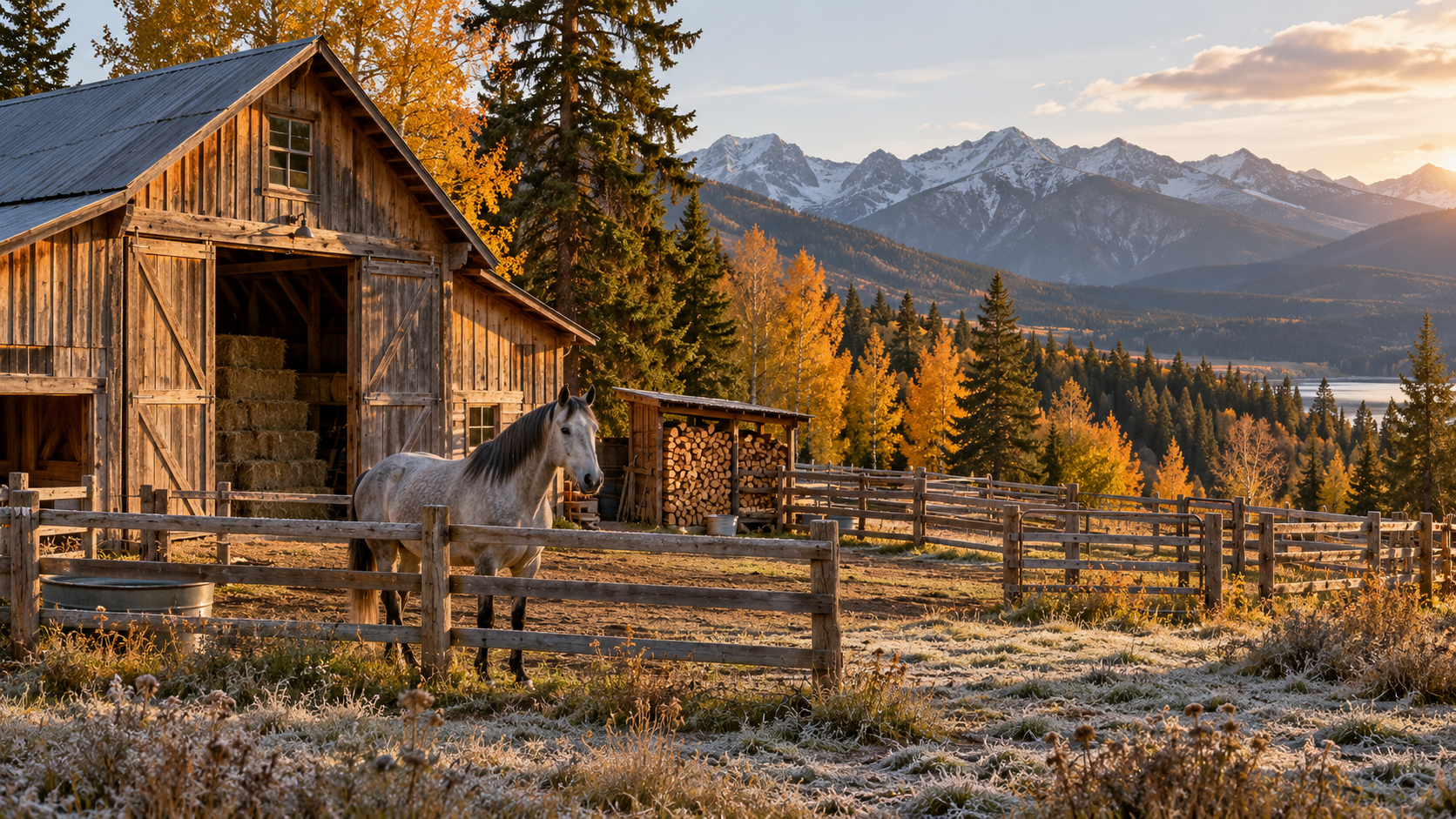
I find myself looking at a gate and wondering whether it will still open with snow piled around it. Looking at the water and thinking about what happens if the power goes out. Looking at the hay storage and asking whether we can reach everything when we need it.
None of these are particularly exciting jobs. But having them done makes a difference when it’s cold, dark, and the animals are waiting for breakfast.
This year, hay has been a big part of that preparation.
Our regular supplier of five years sold the business, and the new owners had made arrangements with other buyers. The supply we had counted on was suddenly no longer available to us. We were heading toward winter without hay in the barn, trying to find enough good hay to carry us through until the next haying season.
We did find hay, thankfully, but the bales are smaller than the ones we usually buy. That means more bales to store and handle, and some adjustments to how we organize things.
It was a reminder that even something you’ve relied on for years can change. Having a familiar routine is reassuring, but this year we still had to make phone calls, ask around and work out another arrangement. I’m grateful we found what we needed, and grateful for the people who helped.
Once the feed is sorted, water is one of the next things on my mind. Every animal still needs water, every day, and I want the winter setup ready before we’re depending on it.
That means going through the hoses and irrigation that need draining, checking the animal watering arrangements, and looking at anything that needs protection from freezing. It also means thinking beyond whether something works today. If a heater or automatic system stops working, what is the backup? Where would we get water, and how would we move it?
We’ve already installed and tested our generator sub-panel. It runs our refrigerator, deep freezer, office internet and lights, and our water system. Being able to test that before an outage was reassuring. We could see what worked while we still had the time and daylight to deal with anything that didn’t.
For me, that’s a big part of preparation: actually trying things before they become necessary.
The same goes for equipment. I want us checking what needs servicing, making sure the winter attachments are accessible, and moving anything that will be in the way. A snow shovel isn’t much use if it’s tucked into the back of a shed we can’t easily reach. Neither is an attachment buried behind everything we used during summer.
There’s also the question of where the snow will go. Keeping the driveway open is one job, but we still need access to the animals, hay, outbuildings and trailer. I want to think through those routes now, while I can see the ground and remember exactly where the awkward spots are.
Around the animal areas, we’re looking at shelters, fencing, gates and bedding. What needs repairing? Where does water collect? Which latch is already annoying on a warm day and will be even worse with cold hands and gloves?
The ducks deserve their own mention here. If there is a way to turn an area into a wet mess, they will find it. Their winter arrangements need a little extra thought, particularly around water and bedding.
I’m also thinking about how to make the daily chores easier. Moving supplies closer to where we use them, keeping halters and tools in consistent places, and having a headlamp ready are small things. But they matter when you’re doing the same chores morning and evening for months.
One job on the list is to walk our usual chore route after dark. It’s easy to overlook lighting when you’re doing everything in daylight. I want to see where a step, gate or uneven patch becomes harder to navigate, and sort it out before winter adds another complication.
The garden and greenhouse have their own unfinished business. There’s produce to bring in, seeds to save, tools to clean and irrigation to put away. Garlic planting is part of our fall routine too, setting something in motion for next year while this growing season winds down.
I like that part of autumn. There’s a sense of closing things up, but also of getting ready to begin again.
Inside the house, preparation includes looking through our food stores and freezer, checking household essentials, and making sure we know where the flashlights and backup chargers are. I want to know what we already have before buying more, and use the food we’ve worked to grow and preserve.
Then there’s a less obvious job: making sure someone else could look after the place if we needed help.
So much of a homestead routine lives in your head. You know which animal gets what, where the supplies are, and what to check when something isn’t working. Someone stepping in wouldn’t necessarily know any of that. Written feeding instructions, labelled containers and useful contacts would make it easier for them, and easier for us to ask for help.
Looking at the whole list can feel like a lot. There is always another job on an acreage, and I don’t expect every corner of ours to be perfectly organized before the first snowfall.
What I want is to have the essentials covered: enough feed, dependable water, safe animal spaces, working equipment and a plan we understand if something fails. From there, we can keep working through the smaller things.
Winter on our property can be beautiful. I want to leave room to enjoy it, rather than spend every cold day dealing with a job we could have handled in October.
And yes, it’s considerably easier to appreciate the snow when the tractor starts.
“The work we do before winter becomes the peace we feel when it arrives.”
— The Wealthy Acre