Buying a Property for a Multigenerational Family
Brilliant Idea or Disaster Waiting to Happen?
Sharing one property can create financial breathing room, practical support and a better quality of life. But only if the property and the people are suited to it.
Multigenerational living is becoming an increasingly attractive idea. Parents, adult children and grandparents combine resources to purchase one property, reduce individual expenses and help one another through different stages of life.
On paper, it can look brilliant.
Instead of three households paying three mortgages or rents, property taxes, utilities and maintenance costs, a family may be able to pool some of that money and purchase something better together. Grandparents may receive support as they age. Parents may have help with childcare. Adult children may have an opportunity to build financial stability without being crushed by housing costs.
It can also offer something we seem to be losing: family nearby, shared meals, people looking out for one another and a little less dependence on expensive outside services.
But let’s be honest. Living together is not automatically easier simply because everyone loves each other.
Sometimes the very people we love most are also the people most capable of driving us completely insane.
A multigenerational property can create security, connection and greater financial resilience. It can also create resentment, privacy problems, disagreements over money and a property that becomes extremely difficult to divide if someone wants out.
The success of the arrangement depends on two things: choosing the right property and having the uncomfortable conversations before buying it.
Start with how everyone will actually live
Before looking at properties, the family needs to decide what multigenerational living means to them.
Are you comfortable sharing one kitchen and several common areas? Or does each household need a separate and self-contained living space?
Some families genuinely enjoy living under one roof. Others function much better when everyone has their own entrance, kitchen, laundry and outdoor space.
There is a very big difference between living together and living near each other.
For many families, the ideal property may be one with a main house and a secondary dwelling, a legal suite, a carriage house or enough land to potentially accommodate another residence. The goal is to create closeness without forcing everyone into each other’s daily routines.
Privacy is not a luxury in a multigenerational arrangement. It may be the very thing that keeps the family relationship intact.
Look beyond the number of bedrooms
A property may have enough bedrooms for everyone and still be completely unsuitable.
The layout matters just as much as the size.
Can people come and go without walking through someone else’s living space? Are there enough bathrooms? Is there suitable parking for several vehicles? Can everyone access laundry without disrupting another household?
Soundproofing is another detail people often overlook. A basement suite may technically provide separate accommodation, but if every conversation, television and footstep travels between floors, it may not feel separate for very long.
Outdoor areas matter too. Separate patios, garden areas, entrances and storage spaces can give each household a sense of ownership and independence.
If aging parents are part of the plan, consider accessibility before it becomes urgent. Look at stairs, narrow hallways, bathroom layouts, uneven walkways and the distance between parking and the entrance. A home that works today may not work five or ten years from now.
Confirm what is legally permitted
Never assume that because a property contains a second kitchen, basement suite, cabin or converted garage, it is legally recognized as a separate dwelling.
Before purchasing, confirm the current zoning, permitted uses, building permits and occupancy approvals with the appropriate local authority. Regulations can vary significantly between municipalities and regional districts.
You need to know whether the property can legally contain:
- A secondary suite
- A detached secondary dwelling
- Multiple residences
- A carriage house or garden suite
- Additional bedrooms connected to the existing septic system
- A future dwelling that the family hopes to build
Also confirm whether any existing renovations or additional living spaces were completed with permits.
This does not automatically mean an unpermitted space is unusable, but you need to understand exactly what you are buying, what may need to be corrected and whether the property can be insured and financed as expected.
The charming little cabin in the trees may look perfect for Grandma. The regional district may have a very different opinion.
Make sure the property’s systems can support everyone
More people means more demand on the property.
If the home is serviced by a well, review the well records and test the water. Consider both water quality and the quantity available. A system that comfortably supplied two people may struggle when six or eight people are showering, doing laundry, watering gardens and operating multiple kitchens.
The septic system also needs careful attention. Confirm its location, age, maintenance history, capacity and condition. Adding bedrooms or another dwelling may require septic upgrades or an entirely new system.
Other practical questions include:
- Is the electrical service large enough?
- How will the home be heated?
- Can the internet support several people working or studying from home?
- Is there enough garbage, food and household storage?
- Where will everyone park?
- Who is responsible for snow removal, lawn care and property maintenance?
- Are there enough outbuildings, workshops or storage areas for everyone’s belongings?
If you are considering an acreage, pay attention to how much of the land is actually usable. A ten-acre property does not necessarily provide ten usable acres. Steep slopes, wetlands, dense forest, poor access and setback requirements can severely limit what can be built or where another residence could be placed.
The purchase price is only the beginning. A less expensive property that requires another dwelling, septic expansion, driveway construction, extensive clearing and utility connections may ultimately cost far more than a property where the necessary infrastructure already exists.
Decide how the money will work
This is where families need to remove emotion from the conversation and get brutally clear.
Who is contributing the down payment? Who will be on title? Who will qualify for and be responsible for the mortgage? How will property taxes, insurance, utilities and repairs be divided?
Will everyone contribute equally, or will contributions be based on income, ownership percentage or the part of the property each household occupies?
What happens when the roof needs replacing? Who pays if one household uses significantly more electricity or water? If one family member contributes money toward a major renovation, does that increase their ownership interest?
These questions may feel awkward, but silence is not a financial plan.
The family should speak with a mortgage professional, accountant and lawyer before committing to a purchase. Financing a property with several buyers or multiple dwellings can be more complicated than financing a typical single-family home. The way ownership is structured can also affect estate planning, taxes, liability and what happens if one owner dies.
Verbal promises made around the kitchen table are not enough when hundreds of thousands of dollars and several people’s housing security are involved.
Create an exit plan while everyone still likes each other
This may be the most important conversation of all.
What happens if one person wants to move? What if a couple separates? What if someone loses their job, becomes ill or can no longer contribute financially? What if an aging parent needs a different level of care?
Can one family member sell their interest? Do the other owners have the first opportunity to buy it? How will the property be valued? What happens if no one can afford to buy the departing person out?
The arrangement should also address death and inheritance. Without proper estate planning, a family may unexpectedly end up co-owning a property with a sibling, former spouse or another beneficiary who was never part of the original plan.
Nobody enjoys planning for death, divorce or financial trouble. Unfortunately, refusing to discuss those possibilities does not prevent them.
A written co-ownership agreement can establish how expenses, decisions, improvements, buyouts and disputes will be handled. Each party should receive independent legal advice so everyone understands their rights and obligations.
That agreement is not a sign that the family distrusts one another. It is evidence that they care enough about the relationship to protect it.
Talk about the small things too
Not every multigenerational conflict begins with money. Some begin with a barking dog, an unwashed frying pan or a grandparent walking into someone’s living room without knocking.
Families should talk openly about:
- Privacy and boundaries
- Guests and overnight visitors
- Pets
- Noise
- Childcare expectations
- Shared meals
- Cleaning and maintenance
- Gardens and outdoor areas
- Smoking or alcohol
- Use of vehicles, tools and equipment
- Decision-making for the property
It is especially important to clarify whether help is being freely offered or quietly expected.
Living near grandparents does not automatically make them full-time childcare providers. Living with adult children does not automatically make them responsible for every repair, appointment or household task.
Unspoken expectations have a nasty habit of turning into resentment.
Think about the property’s future resale value
A highly customized property may work beautifully for one particular family but appeal to a much smaller group of buyers later.
Consider whether the home could function as a conventional residence, a home with a mortgage-helper suite, a property with long-term rental potential or a flexible acreage suitable for several kinds of buyers.
A good multigenerational property should ideally remain useful even if the family arrangement changes.
Separate living areas, good access, adequate parking, legal accommodations and flexible spaces generally give a property more options. Poorly planned additions and awkward conversions may do the opposite.
The question is not only, “Can we live here?”
It is also, “What could we do with this property if our lives changed?”
When multigenerational ownership can work beautifully
Done well, multigenerational living can be a powerful way to create more choices.
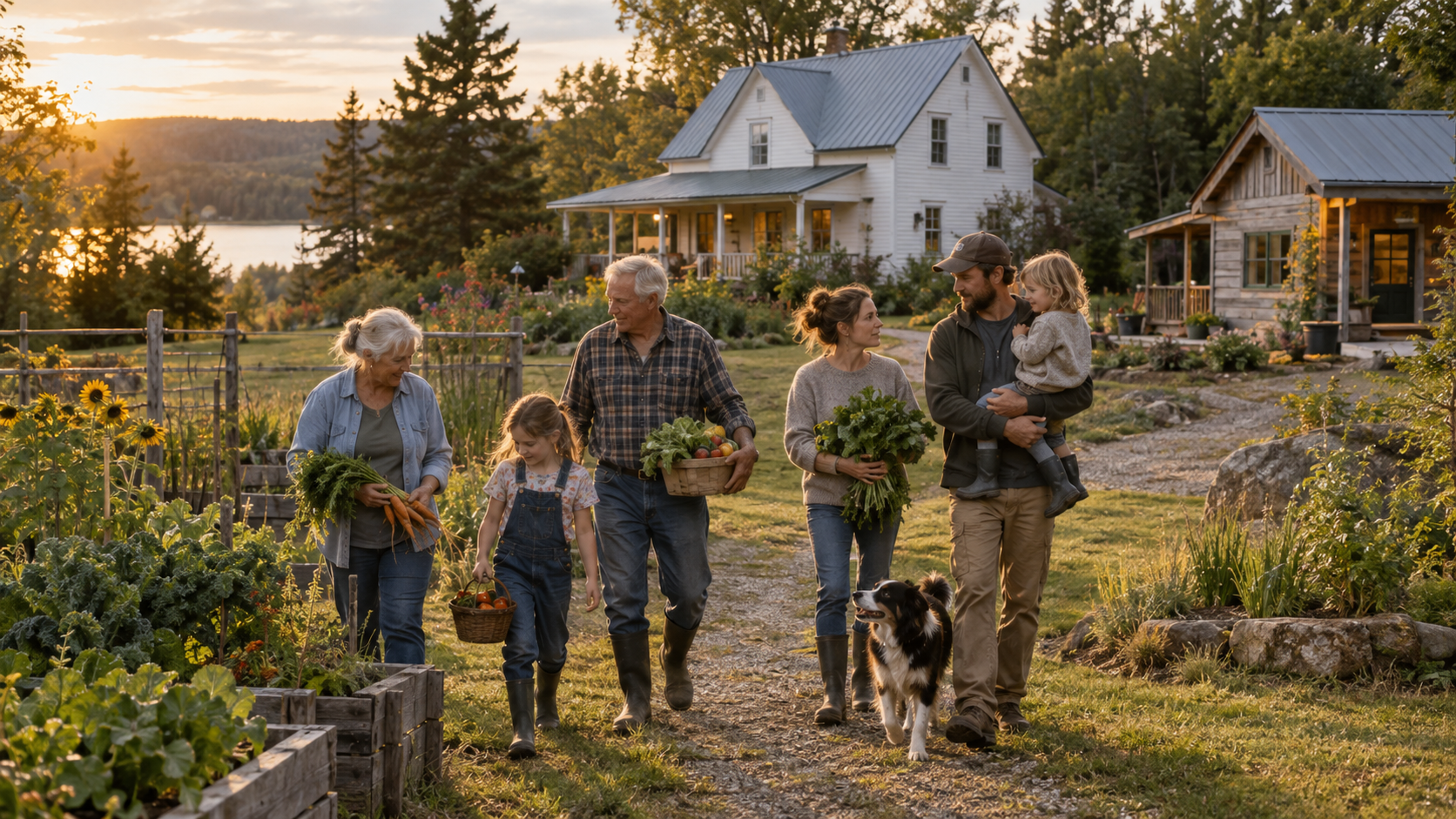
It can help families enter the housing market, care for aging parents, share work, reduce duplication and make better use of land and infrastructure. On an acreage, it may also allow several generations to contribute different skills to gardens, animals, maintenance, childcare or a family business.
It is not about everyone becoming dependent on one another. At its best, it creates a stronger support system while allowing each household to retain some independence.
But the arrangement cannot survive on good intentions alone.
You need the right property, realistic numbers, legal clarity, physical separation where needed and people mature enough to talk honestly about money, boundaries and what happens when the plan changes.
One property shared by three generations could be brilliant.
It could also become an expensive disaster.
The difference will rarely be determined by how much the family loves one another. It will be determined by how carefully they plan.
This article is intended for general information only. Zoning, building, financing, taxation and ownership rules vary by property and jurisdiction. Before purchasing a multigenerational property, obtain advice from the applicable local authority and qualified legal, lending, accounting, insurance and property-inspection professionals.