WILDFIRE EVACUATION CHECKLIST
Make the plan before you need the plan.
BEFORE FIRE SEASON
KNOW WHERE YOU’RE GOING
Choose Destination A: ______________________________
Choose Destination B: ______________________________
Choose Destination C: ______________________________
Confirm which locations can accommodate pets/livestock
Know at least two evacuation routes
Download offline maps to your phone
Know where official local evacuation information is posted
Choose an out-of-area family contact
Emergency meeting place: ____________________________
Out-of-area contact: ________________________________
Phone: __________________________________________
VEHICLES + TRAILERS
Keep vehicles adequately fuelled during high-risk periods
Keep EVs adequately charged
Keep spare fuel safely stored, if appropriate
Keep vehicle and trailer keys somewhere everyone knows
Keep trailers accessible and ready to move
Check trailer tires + spare
Check trailer lights
Check trailer brakes
Make sure animals will actually load
Have a backup plan if a vehicle won’t start
During elevated fire risk, consider parking vehicles facing out for a faster departure
IF YOU HAVE TO LEAVE
🚨 10 MINUTES — GET OUT
Take the things that cannot be replaced first.
PEOPLE
ANIMALS
Essential medications
Phones
Wallet / identification
Critical documents
Keys
Water
Grab-and-go bags
Load vehicles/trailer
Follow official evacuation routes and instructions
Do not risk your life trying to save possessions.
⏱ 30 MINUTES
Everything above, plus:
Animal food + medications
Pet carriers / crates
Halters + lead ropes
Animal identification attached where appropriate
Computers / hard drives
Irreplaceable personal items
Additional food + water
Confirm destination
Contact family / evacuation network
Begin moving livestock early
⏱ 2+ HOURS
Everything above, plus:
Move livestock early if possible
Prepare the property only if conditions and official guidance allow
Move vehicles/equipment as appropriate
Check property access
Final property check
Continue monitoring official information
Leave before conditions deteriorate
More time does not mean you should wait longer to leave.
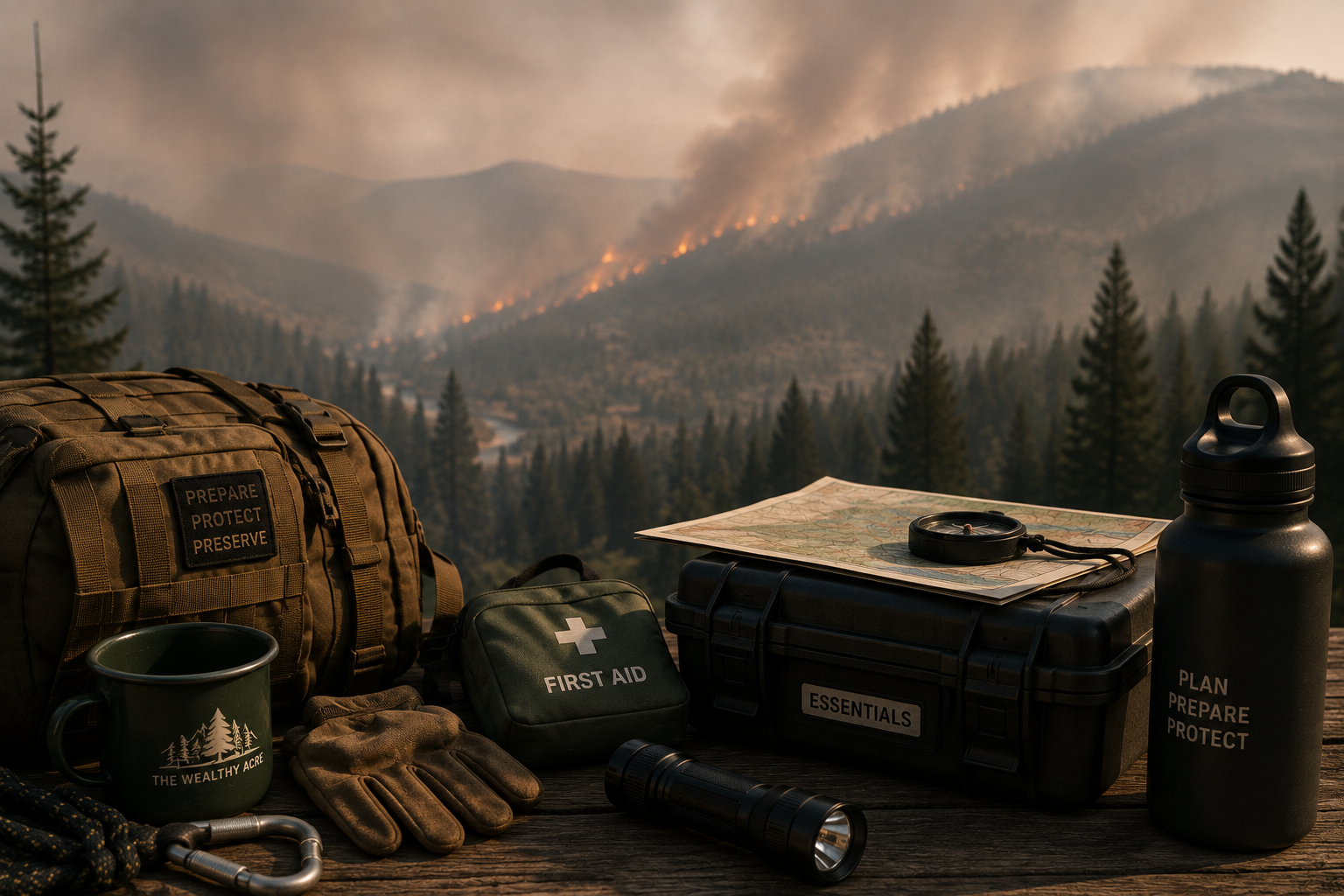
YOUR GRAB-AND-GO BAG
Keep it packed — or keep this list with the bag.
Identification / passports
Insurance information
Essential medications
Prescription list
Phone chargers
Power banks
Cash + cards
Spare keys
Glasses / contact lenses
Water
Easy-to-carry food
Basic clothing
Weather-appropriate clothing
Toiletries
First aid kit
N95 masks for smoke
Flashlight / headlamp
Important phone numbers written on paper
Comfort items for children, if needed
IMPORTANT DOCUMENTS
Keep digital backups somewhere you can access away from home.
Identification
Insurance policies + contact information
Property information
Vehicle information
Emergency contacts
Prescription / medication information
Veterinary records
Animal ownership / registration information
Photos/video inventory of your home
Photos/video inventory of barns, shops and outbuildings
Photos of valuable equipment
Serial numbers for major equipment
Don’t let your house be the only place your important information exists.
DOGS + CATS
Carriers easily accessible
Leashes / harnesses
Food
Water + bowls
Medications
Veterinary / vaccination records
ID tags current
Microchip information current
Recent photos of each animal
Photo of you with each animal
Confirm where your pets can stay
HORSES
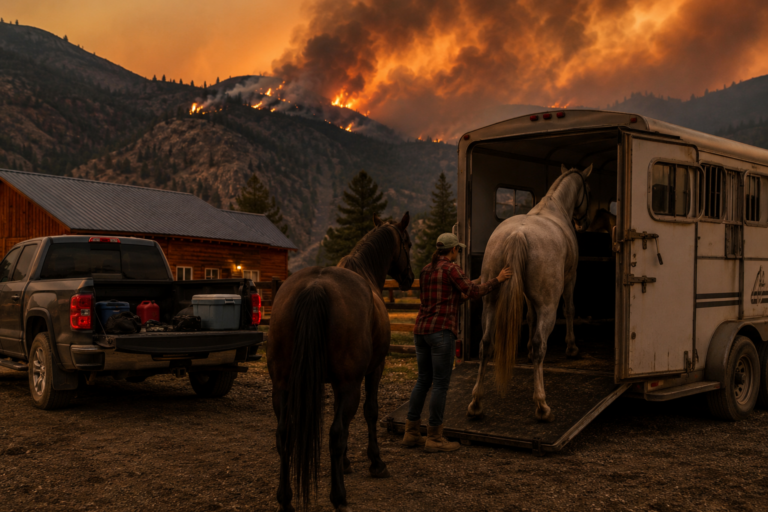
If you own more horses than you can transport at once, plan for that now.
Trailer ready + accessible
Truck fuelled
Horses practise loading
Halters + lead ropes ready
Identification for every horse
Owner’s name + TWO phone numbers
Current photos from both sides
Distinguishing markings documented
Registration / microchip information, if applicable
Veterinary information
Medications
Feed / hay, if practical
Water buckets
Equine first aid supplies
Know who nearby has a trailer
Arrange backup transportation
Have more than one destination available
Number of horses: _______
Trailer capacity: _______
Number of trips required: _______
Backup trailer/contact: _______________________________
Horse destination: __________________________________
CHICKENS • DUCKS • LIVESTOCK
Don’t discover during an evacuation that you don’t have enough crates.
Decide which animals can realistically be transported
Decide what each species will travel in
Have enough crates / containers
Practise catching and loading animals
Feed ready
Water + containers
Identification where practical
Destination arranged
Backup farm / neighbour arranged
Animals: __________________________________________
Transport needed: ___________________________________
Destination: ________________________________________
IF YOU AREN’T HOME
Your emergency plan cannot depend entirely on you being there.
Choose someone who can access the property
Give them keys / access information
Make sure they know your animals
Show them where carriers, halters and leads are
Leave written emergency instructions somewhere obvious
Tell them where animals should go
Choose a second backup person
Primary emergency person: ____________________________
Phone: __________________________________________
Backup person: ____________________________________
Phone: __________________________________________
YOUR 15-MINUTE LIST
If you had 15 minutes, what would devastate you to lose that could fit in your vehicle?
Not the television. Not the replaceable stuff.
Think photographs, hard drives, jewellery, heirlooms and irreplaceable personal belongings.
_________________________________________________________
_________________________________________________________
_________________________________________________________
_________________________________________________________
_________________________________________________________
Know where these things are. Don’t make this list during an evacuation.
YOUR NEIGHBOURHOOD PLAN
Know before fire season:
Who has trailers?
Who can take horses/livestock?
Who has livestock crates?
Who may need help evacuating?
Who can check your animals if you’re away?
Who can open gates / access your property?
Exchange phone numbers
Neighbour / livestock contact: _____________________________
Phone: ______________________________________________
BEFORE YOU DRIVE AWAY
If time and conditions safely allow:
Everyone accounted for
Animals accounted for
Medications
Phones
Wallet / ID
Documents
Go-bags
Destination confirmed
Route checked
Family / emergency contact notified
Official evacuation instructions checked
THEN GO.
Don’t prepare because you believe your home is going to burn down.
Prepare so that if you’re ever told to leave, the hardest decisions have already been made.
Know WHO you’re taking.
Know WHAT you’re taking.
Know WHERE you’re going.
Know HOW you’re getting there.
Know what happens to YOUR ANIMALS.
And know WHO STEPS IN IF YOU’RE NOT HOME.
The house can be rebuilt.
Things can be replaced.
Important: This checklist is provided for general educational and preparedness purposes only and is not a substitute for instructions from emergency officials, local authorities, fire services, veterinarians or other qualified professionals. Wildfire conditions can change rapidly. Always follow current evacuation orders, alerts and official emergency guidance for your area. Never delay evacuation or put yourself or others at risk to save property, belongings or animals. Adapt this checklist to your location, household, animals and circumstances.